

10 Quick Checks for a First Viewing
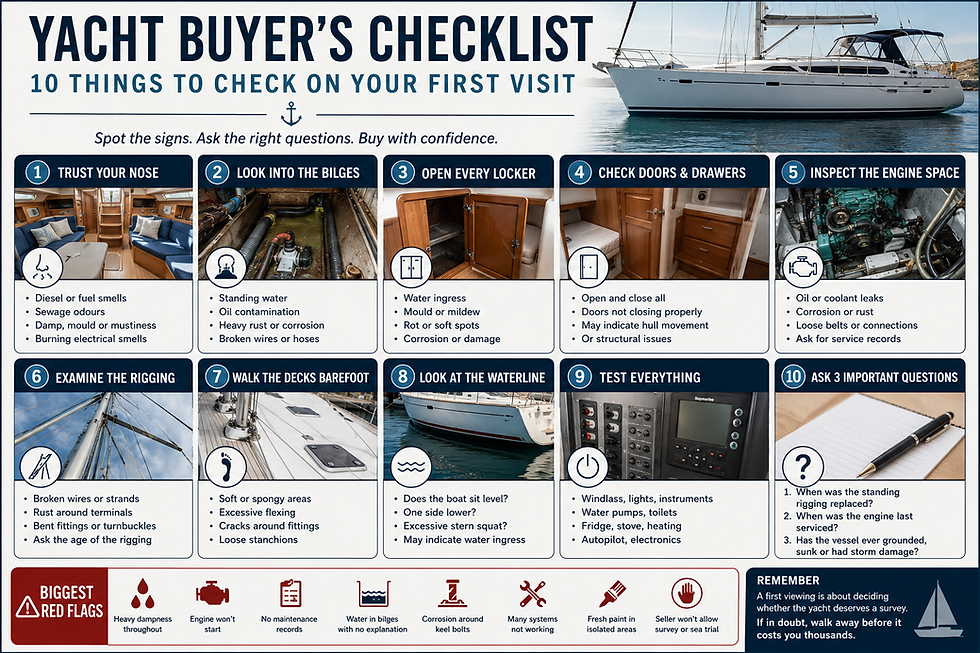
1. Trust Your Nose
As soon as you step aboard, smell the boat.
Watch for:
Strong diesel odours
Sewage smells
Damp or mould
Burning electrical smells
A clean, dry-smelling boat is usually a good sign of attentive ownership.
2. Look Into the Bilges
Lift floorboards wherever possible.
Watch for:
Standing water
Oil contamination
Heavy rust staining
Broken wiring
Signs of recent flooding
A clean bilge often reflects overall maintenance standards.
3. Open Every Locker
Don't be shy.
Look for:
Water ingress
Mould
Rot
Corrosion
Hidden damage
Many problems are concealed behind locker doors.
4. Check Cabin Doors and Drawers
Open and close them all.
If several doors don't shut properly it may indicate:
Hull distortion
Structural movement
Previous grounding damage
Long-term moisture issues
Not always serious, but worth noting.
5. Inspect the Engine Space
You don't need to be an engineer.
Look for:
Oil leaks
Coolant leaks
Corrosion
Loose belts
Excessive rust
Ask for the engine service records.
6. Examine the Rigging
Stand back and look up.
Watch for:
Broken wire strands
Rust staining around terminals
Bent fittings
Missing split pins
Loose mast fittings
If the owner cannot tell you the rigging age, budget accordingly.
7. Walk the Decks Barefoot
Soft areas can often be felt before they are seen.
Watch for:
Spongy decks
Excessive flexing
Cracks around fittings
Loose stanchions
Deck repairs can be expensive.
8. Look at the Waterline
Check whether the boat sits level.
Watch for:
One side noticeably lower
Excessive stern squat
Unusual trim
This can sometimes indicate water ingress or overloaded storage.
9. Test Everything
Operate:
Windlass
Instruments
Lights
Water pumps
Toilets
Refrigeration
Autopilot
If the owner says "it probably works," assume it doesn't until proven otherwise.
10. Ask Three Important Questions
When was the standing rigging replaced?
When was the engine last professionally serviced?
Has the vessel ever grounded, sunk, or suffered storm damage?
The answers often reveal more than the boat itself.
Biggest Red Flags
Heavy dampness throughout the interior.
Engine that cannot be started.
Missing maintenance records.
Water in the bilges with no explanation.
Significant corrosion around keel bolts.
Numerous systems "not currently working."
Fresh paint in isolated areas without explanation.
Seller unwilling to allow a survey or sea trial.
Remember
A first viewing is about deciding whether the yacht deserves a survey. If you find multiple warning signs, you may save thousands of euros simply by walking away before commissioning a professional inspection.
Steven Truss MIIMS often says that the cleanest boats are not always the best boats—but neglected boats nearly always hide expensive surprises.


Comments