

When Cabin Doors Won’t Close: Hidden Signs of Structural Movement in Older Yachts
- 2 minutes ago
- 3 min read
When buyers first step aboard an older yacht, their attention is usually drawn to the obvious things. Fresh upholstery. Polished gelcoat. Modern navigation electronics. A clean engine bay etc. These upgrades often create confidence quickly, and understandably so. A yacht that presents well visually can feel like a safe purchase.

However, some of the most serious and expensive defects I uncover during pre-purchase surveys are rarely obvious during a casual viewing. They are often hidden beneath floorboards, behind interior joinery, or revealed through small warning signs that many buyers simply overlook.

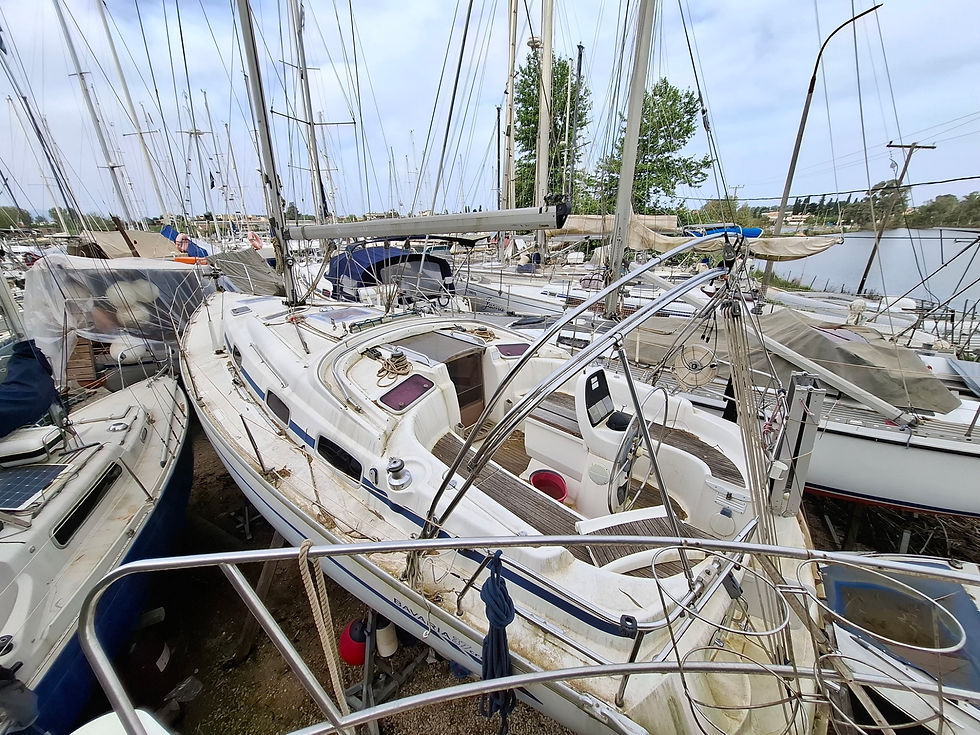
Recently, while surveying an older cruising yacht in Preveza, I came across a perfect example.
At first glance, the yacht appeared well maintained. The hull presented well, the interior looked tidy, and there were no immediate signs of serious neglect.

But as I moved through the internal inspection, several issues began to stand out. The cabin sole boards were difficult to lift and no longer sat correctly in their recesses. Several internal doors were binding and would not shut properly. Floor bearers located forward of the mast step had fractured. Cracks were visible in seating structures where internal joinery had started separating. Individually, these may seem like minor issues. Together, they often indicate something much more serious.
They can be warning signs that the yacht’s structure has moved!
Why a Sticking Cabin Door Matters
Many buyers assume a door that won’t close properly is simply caused by age or humidity.
Sometimes that’s true. But experienced surveyors often treat this as an early structural warning sign.
Yachts are built around fixed structural geometry. When the hull shape changes — even slightly — the interior often reveals the first signs.
Doors stop aligning correctly.
Floorboards become difficult to remove.
Cabinet doors no longer close properly.
Joinery starts separating at the corners.
These issues are often symptoms of structural movement happening elsewhere.
Previous Grounding Damage
One of the most common causes of structural movement is previous grounding damage.
When a yacht strikes the seabed heavily, the force can travel upward through the keel and into surrounding structural components.

This can affect:
Keel bolts
Structural floors
Internal stringers
Bulkheads
Cabin sole framing
Interior joinery
The challenge is that external repairs can sometimes hide the original damage.
Fresh fairing compound.
New antifouling.
Keel repainting.
Cosmetic repairs around the keel joint.
These may make everything appear normal from the outside. Inside the vessel, however, the signs often remain.
Broken structural floors.
Cracked bonding tabbing.
Misaligned sole boards.
Internal furniture movement.
These are all red flags.
Mast Compression Problems
Another potential cause is compression loading around the mast support structure.
This is particularly relevant on larger cruising yachts and deck saloon yachts where significant rig loads are transferred into the hull.

Over time, issues can develop through:
Water ingress
Compression post deterioration
Weak supporting structures
Over-tensioned rigging
Poor previous repairs
When these components begin to fail, the surrounding accommodation can show signs of movement.
Water Ingress Can Slowly Destroy Structural Components
Long-term leaks are another common issue. Water entering through poorly sealed:
Hatches
Windows
Deck fittings
Chainplates
Mast partners
Solar panel installations
can slowly damage timber supports and structural members over many years.
By the time visible movement appears inside the yacht, the underlying issue may have been developing for a long time.

Cosmetic Improvements Can Be Misleading
This is something buyers should always remember. A yacht can look fantastic while hiding expensive structural problems.
I regularly inspect vessels that have received:
New upholstery
Fresh varnish
New electronics
Recent antifouling
Updated canvas work
Yet underneath those upgrades, major structural concerns may still exist. Cosmetic spending does not always equal structural integrity.
What Buyers Should Look For
If you’re viewing an older yacht, pay close attention to small details.
Check whether:
Interior doors close properly
Floorboards lift easily
Joinery shows cracking
Keel repairs appear recent
Moisture is present around structural supports
Mast support areas show signs of stress
These issues do not automatically mean a yacht has serious structural problems.
But they should always be investigated properly.
Why Professional Surveys Matter
Structural issues rarely announce themselves dramatically. More often, they reveal themselves through subtle clues.
A door that sticks.
A floorboard that no longer fits.
A cracked seating locker.
These small details can sometimes indicate very expensive repairs. A professional pre-purchase survey helps identify these issues before money changes hands.
For buyers purchasing yachts in Greece, this can save thousands in unexpected repair costs and provide valuable negotiation leverage.
If you’re considering buying a yacht in Greece and want an independent inspection, feel free to get in touch.



Comments